Showing posts with label fluency. Show all posts

Sunday, February 6, 2011

Reading Fluency, Comprehension, and Writing

Do you know what we are preparing for? Blogging and our State Test.

If we want to blog, we need to know what to write about.

If we want to pass our state test, we need to become excellent readers.

Therefore, we are working on two goals: reading to learn and reading strategies.

First, we read and practice our reading strategies. Did you know that these are the strategies good readers use?

Next we re-read and practice our strategies.

Finally, we read to take notes on the main idea and detail. One way is to complete this form (from Jim Burke's work at the English Companion ).

Do you see the Subject, Main idea, and Details areas?

The subject is the topic.
The main idea is a gist statement: twenty to twenty-five words that summarize the entire text.
The details are the facts and ideas that support the main idea.

You would not believe how easy it is to write a composition -- think great blog post --- using this form. We can draft our composition from the form, adding in our own ideas and opinions using our elaboration strategies.

We edit and check for accuracy. We monitor our paragraphing. We cite our source. Here's an example.

What do you think? Do you have a strategy to become better readers AND better writers? Are you ready to start blogging AND pass your State Test?

We are on our way and will link later to some of our blogs, and we will share our vocabulary strategies also. Check back for more...


Reflect curiosity and wonder...
Go boldly and scatter seeds of kindness...

Sunday, May 10, 2009

Wordle Writing Fluency

"Writing is hard fun." ~ Donald Murray

Writing is not easy.

Imagine all the neurons navigating and flying through your mind as you push that pencil across the paper to inscribe your images and ideas. The image of your mind must translate to words flowing to your fingertips of the sketch in your mind to become scribbles of notes or power in prose or poetry.

To help build fluency so ideas can flow fast, develop a routine of Power Writing, based on the work of Peter Elbow. Ten minutes of time daily will enable you to move ideas from mental thoughts to written work. Here's how:

Power Writing

Create a list of at list six words that will serve as topic ideas. You may write on any topic, however.

The basic process is:
  1. Think.
  2. Write.
  3. Count.
  4. Repeat two more times.

Think about the ideas the words suggest or your own topic for twenty seconds.

Write for two minutes (you may want to start with one minute and build to three minutes; we've even written for three five minute sessions). If you get stuck, just write the last word you wrote over and over until an idea pops into your head. Your receive credit for the number of different words you write. Your fluency should improve over time.

After two minutes (or whatever time allotted), stop and count their words, writing the number at the top of the page. Some people keep track of these and take averages.

Repeat --Think. Write. Count-- two more times.

Options:
Share writing with partners.
Circle your favorite.
Edit one section.
Keep a form of each set of three with an average for each set of three.
Ask for show of hands for number of words written (80, 70, 60, etc.).


From where can you easily obtain word lists to use?

My students love the Wordles I create for our Power Writing (samples here). I google topics on which we are learning. My google searches have included:

kids moose
kids cougar
kids fairy tales

I copy and paste kid texts into Wordle to create a cloud of words on that topic. Often, I simply take a screen shot of the Wordle , but always link to their site as source.

Here is a sample Wordle of Ralph Waldo Emerson's poem Song of Nature from Poets.org.


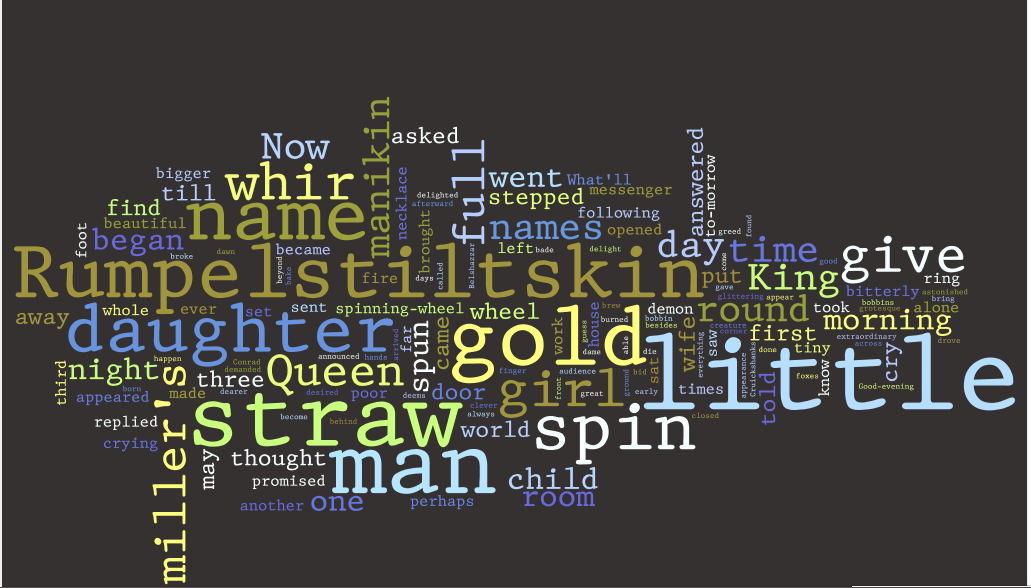
A Wordle on Rumpelstiltskin:


Any of your vocabulary or spelling lists would also work. Here are some lists resources

http://dictionary-thesaurus.com/Wordlists.html

http://www.eduplace.com/kids/hmsv/
Spelling City Word Lists


Power Point Directions, Lists, Samples:


Other content area teachers have commented, "I don't know what you're doing in writing class, but the kids can sure start writing ideas now." So, start Power Writing in your class to help your students move from ideas to words.

Monday, November 24, 2008

October Observations

Power Writing.

Students stagnate; they need fluency. Writing requires the ability to translate thought into written discourse. The writing is not simply talk written down. It flows in the readers mind IF it is organized, vibrant, interesting, and precise. More precisely, according to William Zinsser, "Four basic premises of writing: clarity, brevity, simplicity, and humanity."

How can I move my students into more fluid and fluent writing? Peter Elbow, Writing with Power, says, "Freewriting is the easiest way to get words on paper and the best all-around practice in writing that I know." In his introduction, he explains that "...writing with power also means getting power over yourself and over the writing process; knowing what you are doing as you write; being in charge; having control; not feeling stuck or helpless or intim­idated."

I know Mr. Elbow didn't want a teacher's intrusion into this powerful, free-writing technique, but I need to encourage my students into unintimidating writing -- to guide them into free-flowing thinking transformed into many words on paper. Without the ability to let ideas flow, my students would not ever become good writers.

A former colleague had introduced me to a National Writing Project class activity, "Power Writing." From her description I created word lists and a power writing format for students to follow to develop writing fluency. Here's the process:


Students focus, engage, and write. It's very exciting. An activity this week and next will be creating "Found Poems" from our power writing. Students will find fifteen consecutive words that are interesting or clever to them. We'll read their choices in a performance of a living poem while we listen and admire our fluency power.

With our new power in putting prose on paper, we'll be able to move to manipulating the language into wonderful words, words of brevity, clarity, simplicity, and humanity.

Writing will be power !