Showing posts with label power writing. Show all posts

Sunday, September 4, 2016

An Idea for You: Just Write


Today, just pick up your pen and put it to paper, or open a document and hit the keyboard. Just start writing what pops into your mind.

Keep writing until an idea begins to form, then just imagine and let your thinking flow through your fingers. Keep writing. If you reach a blank just type or write the last word you wrote over and over until the mood of your mind hatches another happening to add.

Switch topics, or don't.

Just keep writing without worry for spelling or paragraphing or punctuation. 

Time yourself for three minutes.  How many words did you write or type?

Time yourself for another three minutes. Did you write or type more than before?

Repeat again.

Now look over what you wrote -- read for a possible idea, good descriptions, strong verbs, a short story, humor.  Highlight those parts.

Find a part with possibilities. Something of interest to you that you could add more detail and action, or change into a poem,  or rewrite as a song. Circle it. 

Here's an example [notice lack of punctuation and capitalization -- just getting ideas down].

I pushed and ran with Jack on the bike letting go as he found his balance proud he could take off the first time and just fly down the sidewalk until his bike edged towards the landscaped edging of the lawn; the tire stuck and stopped and Jack flew off onto the sidewalk.
Save it for another day, or if possible, begin sculpting the story: cut out what doesn't work, and dig in a detail. Refine what's good already. Don't try to be perfect or tell the whole story: just get this part penned better.   Slow down the action, and describe second by second. Here's an example:

Jack slid his leg over the bike and placed his right foot upon the petal. He nodded, his helmet firmly on, and his eyes looking straight ahead, ready to ride. 
I balanced the bike as he pushed his front pedal down, propelling himself and the bike forward. I let go of the handlebar and began running beside him, holding onto the seat, until his balance and force took control. He flew down the gray sidewalk like a pro, squealing with delight.  
I was left behind to watch this daredevil race at full speed down the sidewalk, feeling the pride he must feel in his first attempt to ride his new blue bike with no training wheels.  
Brother Bob cheered him on, and we enjoyed the seemingly perfect first ride. But then his bike edged towards the landscaped edging of the lawn, that small ditch stopping the lawn from overgrowing onto the sidewalk, just wide enough for a bike tire.  
My hands flew to cover my scream, "Watch out!" 
Jack's tire stuck in the edging which stopped the bike and sent Jack summersaulting over the handlebar and onto the sidewalk, thud. Still. 
Bob and I rushed to the unconscious five-year-old just as he came to, reaching for his bike and another daring ride.

Do you see how the short idea paragraph was expanded with details so the reader could imagine the story with the writer's words? Do you see how the action is slowed down, and details added to put the reader right into the action. Do you see all the strong verbs of action [in bold]? It's still not perfect, but it's ready for the Writers Notebook to save for another day -- to add to a story that hasn't been written yet, but whose character development has begun with one free-write.

Go ahead! Try it. Develop your fluency with Power Writing.

If you want more information on Power Writing, click here.

Share your work or a link to it in the comments below.


Sunday, May 10, 2009

Wordle Writing Fluency

"Writing is hard fun." ~ Donald Murray

Writing is not easy.

Imagine all the neurons navigating and flying through your mind as you push that pencil across the paper to inscribe your images and ideas. The image of your mind must translate to words flowing to your fingertips of the sketch in your mind to become scribbles of notes or power in prose or poetry.

To help build fluency so ideas can flow fast, develop a routine of Power Writing, based on the work of Peter Elbow. Ten minutes of time daily will enable you to move ideas from mental thoughts to written work. Here's how:

Power Writing

Create a list of at list six words that will serve as topic ideas. You may write on any topic, however.

The basic process is:
  1. Think.
  2. Write.
  3. Count.
  4. Repeat two more times.

Think about the ideas the words suggest or your own topic for twenty seconds.

Write for two minutes (you may want to start with one minute and build to three minutes; we've even written for three five minute sessions). If you get stuck, just write the last word you wrote over and over until an idea pops into your head. Your receive credit for the number of different words you write. Your fluency should improve over time.

After two minutes (or whatever time allotted), stop and count their words, writing the number at the top of the page. Some people keep track of these and take averages.

Repeat --Think. Write. Count-- two more times.

Options:
Share writing with partners.
Circle your favorite.
Edit one section.
Keep a form of each set of three with an average for each set of three.
Ask for show of hands for number of words written (80, 70, 60, etc.).


From where can you easily obtain word lists to use?

My students love the Wordles I create for our Power Writing (samples here). I google topics on which we are learning. My google searches have included:

kids moose
kids cougar
kids fairy tales

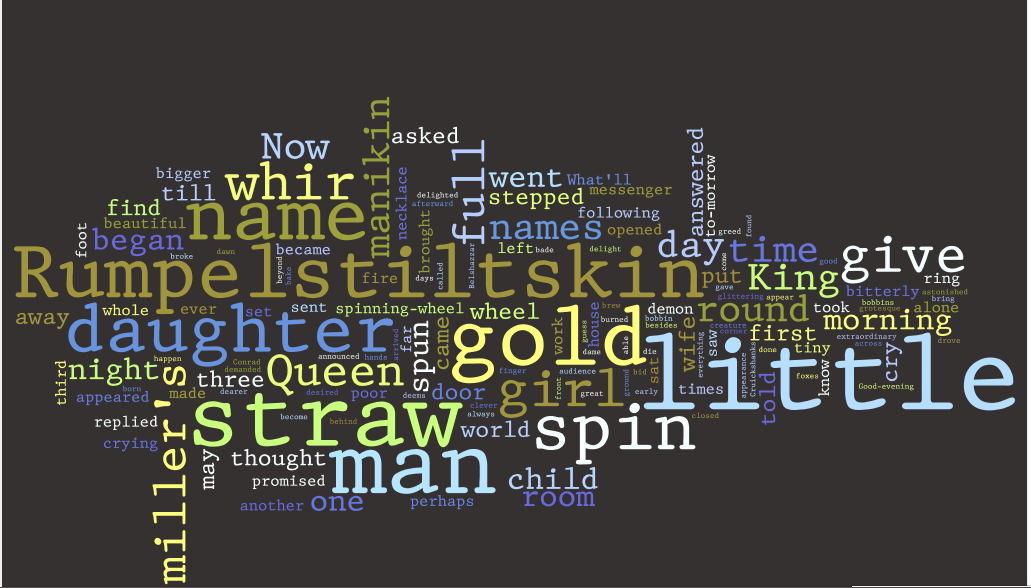
I copy and paste kid texts into Wordle to create a cloud of words on that topic. Often, I simply take a screen shot of the Wordle , but always link to their site as source.

Here is a sample Wordle of Ralph Waldo Emerson's poem Song of Nature from Poets.org.


A Wordle on Rumpelstiltskin:


Any of your vocabulary or spelling lists would also work. Here are some lists resources

http://dictionary-thesaurus.com/Wordlists.html

http://www.eduplace.com/kids/hmsv/
Spelling City Word Lists


Power Point Directions, Lists, Samples:


Other content area teachers have commented, "I don't know what you're doing in writing class, but the kids can sure start writing ideas now." So, start Power Writing in your class to help your students move from ideas to words.

Sunday, April 5, 2009

!3 Ways to a Non Writer

13 Unlucky Ways to Create a Non-Writer Today


Why would we want to create nonwriters? We don't! But with the schools at the edge of both a funding crisis and a technological revolution, these deserve careful consideration.

First, read the inspiration for this blog at Choice Literacy by S. Rebecca Leigh .

Ponder the path we're on and start a dialogue on our practice in our schools, in our PLNs, and in our tweets. What would you add?

13 Unlucky Ways:

1. Tell children that writers write at desks first, not on a computer, not on a cellphone, and most certainly not while talking to someone else.

2. Correct all misspellings, including txt; U R 2 wrtie wel and purfekt the phurst time.

3. Squash the txtg. Writing is for learning how to organize thoughts and add more detail. Texting is a waste of thought and time.

4. Absolutely, positively no collaboration with another author, especially online. Children have to find their own voice and figure out how to write well without help. If they work together, how do you know who did the writing?

5. Don't encourage writing with photos. They serve a purpose, obviously. If you allow students to write with photos, how will they learn to write a thesis?

6. Only publish online absolutely perfectly spelled work. We don't want people to think the kids aren't learning what's important.

7. Be sure to separate reading and writing; think of the confusion of mixing the two areas. What would anyone learn by reading a blog and commenting on it?

8. Always write first on paper; writing on paper helps you organize. The computer is for revision and final drafts only.

9. Under no circumstances combine media and language. Use the English classroom for written language only; there's no time or reason to include digital media.

10. English class is for writing. Computer class is for computing.

11. Keep writing in the English class; how can children learn to write if they don't complete exercises every day on paper?

12. All research for writing reports must be done from legitimate sources from the library. Take notes on notecards; you won't always have a computer with you.

13. Follow the English text; never follow the style of other authors, and certainly, don't share your own writing. Just keep the kids guessing.


Note: This idea was suggested by fellow tweeter and motivator kellyhines based on an entry at Choice Literacy by S. Rebecca Leigh.

Remember:

Ponder the path we're on and start a dialogue on our practice in our schools, in our PLNs, and in our tweets.

What would you add?


grammasheri

Monday, November 24, 2008

October Observations

Power Writing.

Students stagnate; they need fluency. Writing requires the ability to translate thought into written discourse. The writing is not simply talk written down. It flows in the readers mind IF it is organized, vibrant, interesting, and precise. More precisely, according to William Zinsser, "Four basic premises of writing: clarity, brevity, simplicity, and humanity."

How can I move my students into more fluid and fluent writing? Peter Elbow, Writing with Power, says, "Freewriting is the easiest way to get words on paper and the best all-around practice in writing that I know." In his introduction, he explains that "...writing with power also means getting power over yourself and over the writing process; knowing what you are doing as you write; being in charge; having control; not feeling stuck or helpless or intim­idated."

I know Mr. Elbow didn't want a teacher's intrusion into this powerful, free-writing technique, but I need to encourage my students into unintimidating writing -- to guide them into free-flowing thinking transformed into many words on paper. Without the ability to let ideas flow, my students would not ever become good writers.

A former colleague had introduced me to a National Writing Project class activity, "Power Writing." From her description I created word lists and a power writing format for students to follow to develop writing fluency. Here's the process:


Students focus, engage, and write. It's very exciting. An activity this week and next will be creating "Found Poems" from our power writing. Students will find fifteen consecutive words that are interesting or clever to them. We'll read their choices in a performance of a living poem while we listen and admire our fluency power.

With our new power in putting prose on paper, we'll be able to move to manipulating the language into wonderful words, words of brevity, clarity, simplicity, and humanity.

Writing will be power !